· Updated · Industry Insights · 6 min read
5 Ways AI Is Automating Supply Chain Management for Small Businesses
Discover 5 proven AI supply chain automation scenarios for small businesses. Cut costs 20-35%, reduce stockouts, and automate procurement without hiring.
Why Small Supply Chain Companies Are Turning to AI in 2026
Running a supply chain or logistics company with 20 to 50 employees means you are constantly juggling inventory levels, supplier communications, order fulfillment, and demand forecasts — usually with a team that is already stretched thin. One delayed shipment or stockout can cascade into lost revenue and damaged client relationships.
The good news? AI supply chain automation is no longer reserved for enterprise giants. Purpose-built AI employees can now handle the repetitive, data-heavy tasks that consume your team’s time — at a fraction of the cost of hiring additional staff.
In this guide, we break down five specific automation scenarios where AI delivers measurable ROI for small and mid-sized supply chain businesses. Each scenario covers the pain point, the AI solution, and the expected impact on your bottom line.
Scenario 1: AI-Powered Demand Forecasting
The Pain Point
Most small logistics companies rely on spreadsheets and gut instinct to forecast demand. When seasonal trends shift or a key client changes order volumes, your team scrambles to adjust. Over-ordering ties up capital in excess inventory; under-ordering leads to stockouts and emergency procurement at premium prices.
The AI Solution
An AI employee analyzes your historical sales data, seasonal patterns, market signals, and even external factors like weather or economic indicators to generate accurate demand forecasts — updated in real time. Unlike a human analyst who might produce a monthly report, the AI continuously recalculates as new data flows in.
EchoAI’s digital employees integrate directly with your existing ERP or inventory management system, pulling data automatically and pushing updated forecasts to your purchasing team’s dashboard.
Expected Impact
- 20–35% reduction in excess inventory carrying costs
- 15–25% fewer stockout incidents within the first quarter
- 10+ hours per week freed from manual spreadsheet analysis
For a company carrying $500K in inventory, even a 20% reduction in overstock saves $100K annually in tied-up capital.
Scenario 2: Automated Procurement and Purchase Orders
The Pain Point
Your procurement coordinator spends hours each week comparing supplier quotes, manually creating purchase orders, chasing approvals, and following up on delivery timelines. Mistakes in PO creation lead to wrong quantities, wrong specs, and costly returns.
The AI Solution
AI procurement automation handles the entire purchase order lifecycle. It monitors inventory levels against reorder points, automatically generates POs based on pre-approved vendor lists and pricing agreements, routes them for digital approval, and tracks confirmations. When a supplier confirms a delay, the AI immediately flags affected orders and suggests alternative sources.
We covered this in detail in our post on why SMBs should automate procurement before hiring — the ROI is often immediate.
Expected Impact
- 80% reduction in manual PO processing time
- 5–12% cost savings from optimized vendor selection and early-payment discounts
- Near-zero error rate on purchase order accuracy
Scenario 3: Real-Time Order Tracking and Customer Communication
The Pain Point
“Where is my order?” is the question your customer service team answers dozens of times per day. Manually checking tracking systems, copying status updates, and emailing customers is repetitive work that drains morale and delays responses.
The AI Solution
An AI employee monitors all active shipments across carriers in real time. When a customer inquires about an order, the AI instantly pulls the latest status and responds — via email, chat, or your customer portal. It also proactively sends notifications when shipments are delayed, out for delivery, or delivered, reducing inbound inquiries by up to 60%.
The AI handles exceptions too. If a package is stuck in transit beyond the expected window, it escalates to your team with a pre-drafted carrier claim and a customer communication ready for review.
Expected Impact
- 60% fewer inbound order-status inquiries
- Response time cut from hours to seconds for tracking questions
- Higher customer satisfaction scores from proactive updates
Scenario 4: Supplier Performance Monitoring and Risk Alerts
The Pain Point
You rely on a network of suppliers, but tracking their on-time delivery rates, quality metrics, and pricing consistency is a manual nightmare. By the time you notice a supplier is underperforming, you have already absorbed the cost of delays and defects.
The AI Solution
AI continuously monitors every supplier interaction — delivery times, invoice accuracy, quality rejection rates, and communication responsiveness. It builds a dynamic supplier scorecard and sends you alerts when performance drops below your thresholds. If a supplier’s on-time rate falls below 90%, for example, the AI flags it and recommends backup vendors from your approved list.
This transforms supplier management from reactive firefighting into a data-driven process that protects your operations before problems escalate.
Expected Impact
- Early detection of supplier issues — weeks before they impact your operations
- 15–20% improvement in overall supplier on-time performance through accountability
- Data-backed negotiation leverage with concrete performance metrics
Scenario 5: Intelligent Warehouse and Inventory Optimization
The Pain Point
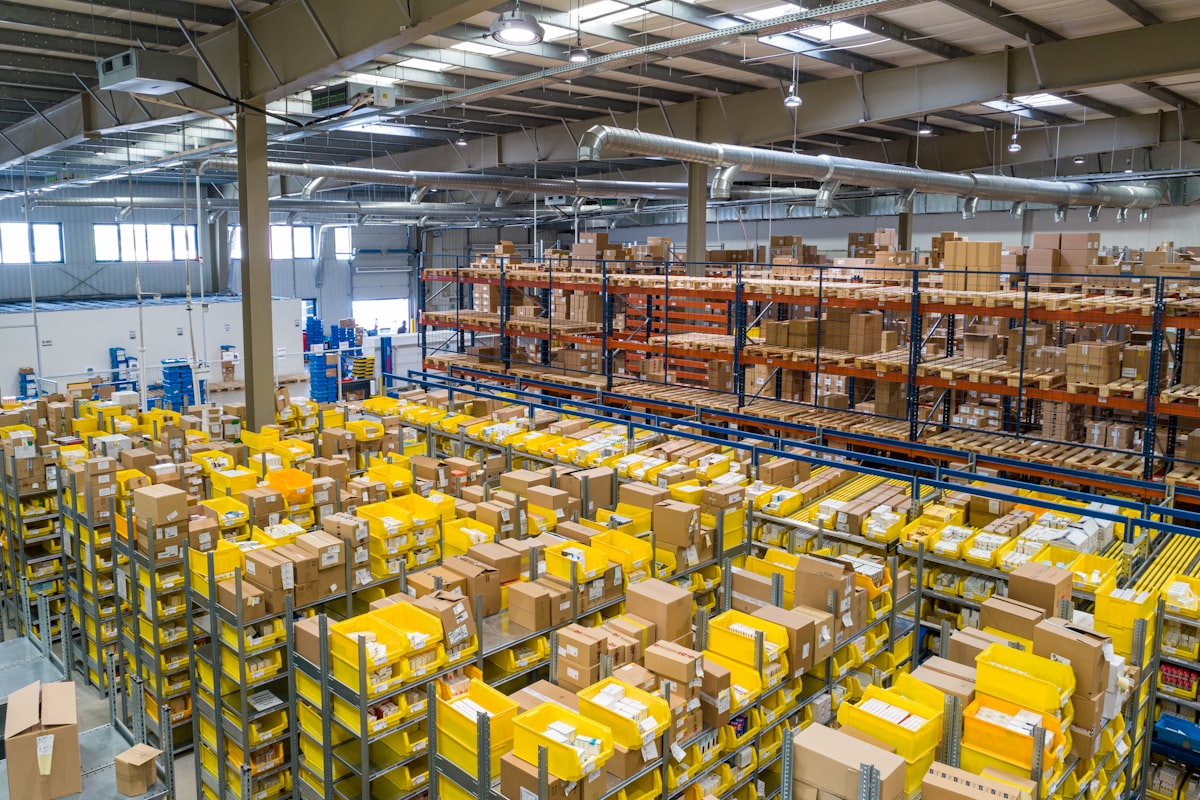
Warehouse operations in small logistics companies often rely on tribal knowledge — one person knows where everything is, what moves fast, and how to slot products efficiently. When that person is out or leaves, chaos follows. Manual cycle counts are infrequent and error-prone.
The AI Solution
AI analyzes product velocity, seasonal demand patterns, and order profiles to optimize warehouse slotting continuously. Fast-moving items are positioned for quick picking, and the system generates optimized pick paths that reduce travel time. AI also triggers cycle counts based on value and movement frequency rather than arbitrary schedules, catching discrepancies before they become write-offs.
When integrated with your WMS, an AI employee can also predict labor needs based on incoming order volumes, helping you schedule staff more efficiently.
Expected Impact
- 25–40% improvement in picking efficiency
- 30% reduction in inventory discrepancies
- Better labor utilization through demand-based scheduling
AI Employee vs. Hiring: The Real Cost Comparison
Many supply chain owners assume automating these tasks requires a massive technology investment. The reality is far simpler. An AI employee from a platform like EchoAI costs a fraction of a full-time hire — and works 24/7 without sick days, training ramps, or turnover.
We break down the exact numbers in our comparison of AI employee costs vs. traditional hiring. For most SMB supply chain companies, the math is clear: automation pays for itself within the first 60 days.
How to Choose the Right AI Platform for Your Supply Chain
Not all AI tools are created equal. You need a platform that integrates with your existing systems, requires minimal technical setup, and provides human-like communication skills for customer and supplier interactions. Our AI employee platform buying guide walks you through the key evaluation criteria.
Getting Started: Your First 30 Days with AI Supply Chain Automation
The fastest path to ROI is to start with one high-impact scenario — typically demand forecasting or procurement automation — and expand from there. Most EchoAI customers see measurable results within the first 30 days.
Ready to see how AI employees can transform your supply chain operations? Book a demo and we will show you exactly how each scenario applies to your business.